What to Pack in Your Hospital Bag: The Complete UK Guide for 2026
Packing your hospital bag is one of those moments that makes it all feel very real. Tiny sleepsuits, your favourite toiletries, something lovely to wear afterwards: this guide brings together the practical essentials and the little comforts that can help you feel more at home. We have organised it by labour, your postnatal stay and baby's first days, so you can pack a little at a time.
When Should You Pack Your Hospital Bag?
The NHS suggests having your bag packed at least three weeks before your due date. Your maternity team can advise if you should prepare earlier. Use their guidance alongside this list, especially for any individual medical or feeding needs.
You might like two bags: one for labour and one for your postnatal stay. A single organised bag with clear sections works too. Show your birth partner where everything is before the day arrives.
What to Pack in Your Hospital Bag: The Complete List
For Labour
- Loose, comfortable clothing — something you feel at ease in and do not mind getting messy.
- Lip balm — pop your usual favourite in your washbag.
- Hair ties and a headband — to keep hair off your face during active labour.
- Snacks — pack favourites for you and your birth partner, following your maternity team's advice about eating during labour.
- Drinks — a refillable water bottle keeps a drink close at hand.
- A birth plan — print two copies, one for the midwife and one for your notes.
- Your hospital notes — together with any documents your maternity unit has asked you to bring.
- Phone charger and portable battery pack — your phone battery will drain fast.
- Tens machine — if you plan to use one, check the hospital's policy first.
- Music or a playlist — many women find a curated playlist invaluable during labour.
- A fan or cooling spray — labour wards can be very warm.
- Pillow from home — a familiar pillow can be a lovely comfort. Use a distinctive pillowcase so it is easy to recognise.
For Your Postnatal Stay
Clothing for you:
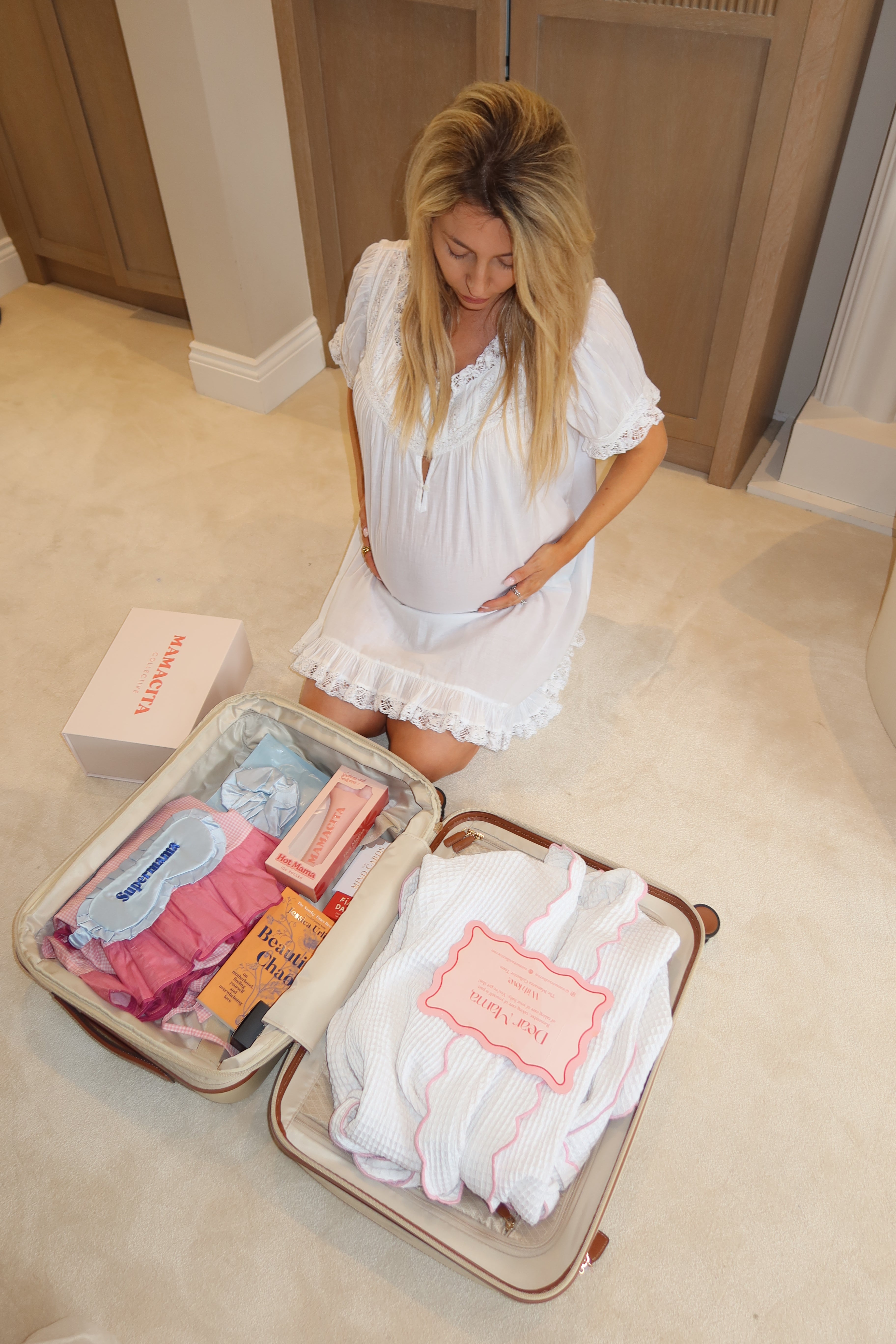
- A luxury robe or dressing gown — something lovely to wrap around you during your stay and back at home. The Arabella Scallop Robe combines 100% cotton waffle with scalloped details, deep pockets and beautiful three-quarter-length flared sleeves. It is a piece to enjoy well beyond your hospital bag.
- 2–3 nursing nightdresses or soft pyjamas — front-opening for breastfeeding if you plan to nurse.
- Comfortable knickers — pack spare pairs and choose a fit that feels comfortable. Ask your maternity team about any particular needs after a caesarean.
- Maternity pads — the thick, long ones. Bring at least two packs.
- Nursing bras (x2 minimum) — soft, wire-free.
- Warm, non-slip socks — hospital floors are cold.
- Slippers or flip-flops — for walking to the bathroom and shower.

Toiletries:
Keep your favourites together in our Personalised Ruffle Washbag: ruffled gingham, name embroidery and a wipe-clean lining. A lovely piece to pack now and use again for weekends away.
- Travel-size shampoo, conditioner, and shower gel
- Gentle face wash and moisturiser
- Toothbrush and toothpaste
- A silk eye mask — a little familiarity for your bedside. Our Sienna Silk Eye Mask is made from pure Mulberry silk and pairs beautifully with your favourite nightwear.
- A silk scrunchie — handy for keeping your hair up, and a pretty little addition to your washbag.

Practical items:
Remember regular medicines and any glasses or contact lenses you use. The full NHS checklist also covers essentials for your birth partner.
- Cash and change for the hospital car park
- Kindle, iPad or downloaded shows — the middle-of-the-night feeding hours are long
- Headphones
- A spare bag for worn clothing
For Your Baby
- Sleepsuits (babygrows) — pack a few changes, guided by your maternity unit's checklist.
- Vests (bodysuits) — ready to go with baby's outfits.
- A hat — include one in baby's bag and follow your maternity team's advice on what baby should wear.
- Scratch mitts — newborn nails are sharp
- Nappies — bring a small pack; the hospital may provide some but not always
- Cotton wool or water wipes
- A going-home outfit — something soft, easy to dress them in quickly
- A car seat — fitted and ready in the car before you leave for the hospital
- A muslin or two — endlessly useful
- A blanket — ready for baby's journey home.
What to Leave at Home
- Lots of extra outfits — keep a few favourites within easy reach.
- Expensive jewellery.
- Heavy books (go digital).
- Multiple pairs of shoes — one pair of slippers and one pair of flip-flops is enough.
Hospital Bag Checklist by Trimester
First trimester: Start a note on your phone with items to buy gradually. No need to pack yet.
Second trimester: Start gathering the things you would like to bring. It is a lovely time to choose baby's first outfits and something comfortable for yourself.
Third trimester: Pack and check your list, aiming to be ready at least three weeks before your due date, or earlier if your maternity team advises.
Hospital Bag FAQ
Do I need a separate bag for the baby? Not necessarily. A small section of your main bag or a tote bag is enough for baby essentials.
Should I pack snacks for my birth partner? Yes. Birth partners often don't want to leave the room to find food, and hospital vending machines have limited options.
Do UK hospitals provide towels? Check with your maternity unit. Bringing your own towel can add a familiar comfort.
What size baby clothes should I pack? You might like a couple of size options. Keep an extra outfit ready at home for someone to bring in if needed.
Can I use a TENS machine in the hospital? Ask your maternity team about using one and bring spare batteries if you plan to use it.
How long will I stay in hospital after birth? This varies with your and your baby's needs. Ask your maternity team what to plan for, and leave spare clothes and supplies somewhere easy for a partner or friend to find.
Little Comforts Worth Making Room For
Once the essentials are ready, these are the little extras we would make room for:
- A good robe — something that feels like you, not a hospital gown
- A proper eye mask for sleep between feeds
- Favourite snacks for you and your birth partner
- An extra phone charger
- A hair tie with no metal clasp
Mamacita Collective is a UK luxury gifting brand designed for new mums and mums-to-be. Our hospital bag edit — including the Arabella Scallop Robe, Sienna Silk Eye Mask, and personalised washbag — was created by our team of mamas in our London studio.
If you are adding personalisation, allow 2–3 working days plus delivery. Available embroidery options are shown on each product page.

